
In August, when Londoners travel, it can feel strange to stay put: “Did you go to the beach?” people would ask.
That’s when I went to see Sufra – a North London charity that fights hunger and builds community. I had been invited by their Head of Food Aid to see the new Community Wellbeing Service: the kind of holistic, wraparound food support the government now seems to recognise as necessary, and has started to fund through its Crisis and Resilience Fund.
In my summer haze, I took the address off their website and headed for Stonebridge, where Sufra has long run a food bank and built a community garden near the big St Raphael’s estate. The word sufra means the cloth laid out to serve a shared meal, and the name fits. With their traditional focus on Muslims and refugees, they had made their name serving the racialised, and building community, rather than simply handing out food.
The bus left me on a quiet road off the North Circular, in the middle of the estate. I passed the community garden, where people were working. But the moment I stepped inside the building and announced myself, I realised my mistake. I had gone to the old site. My meeting was at a new venue, the New Horizons Centre off Roundwood Park, which Brent Council had provided as a multi-care hub to house Sufra’s new wraparound service.
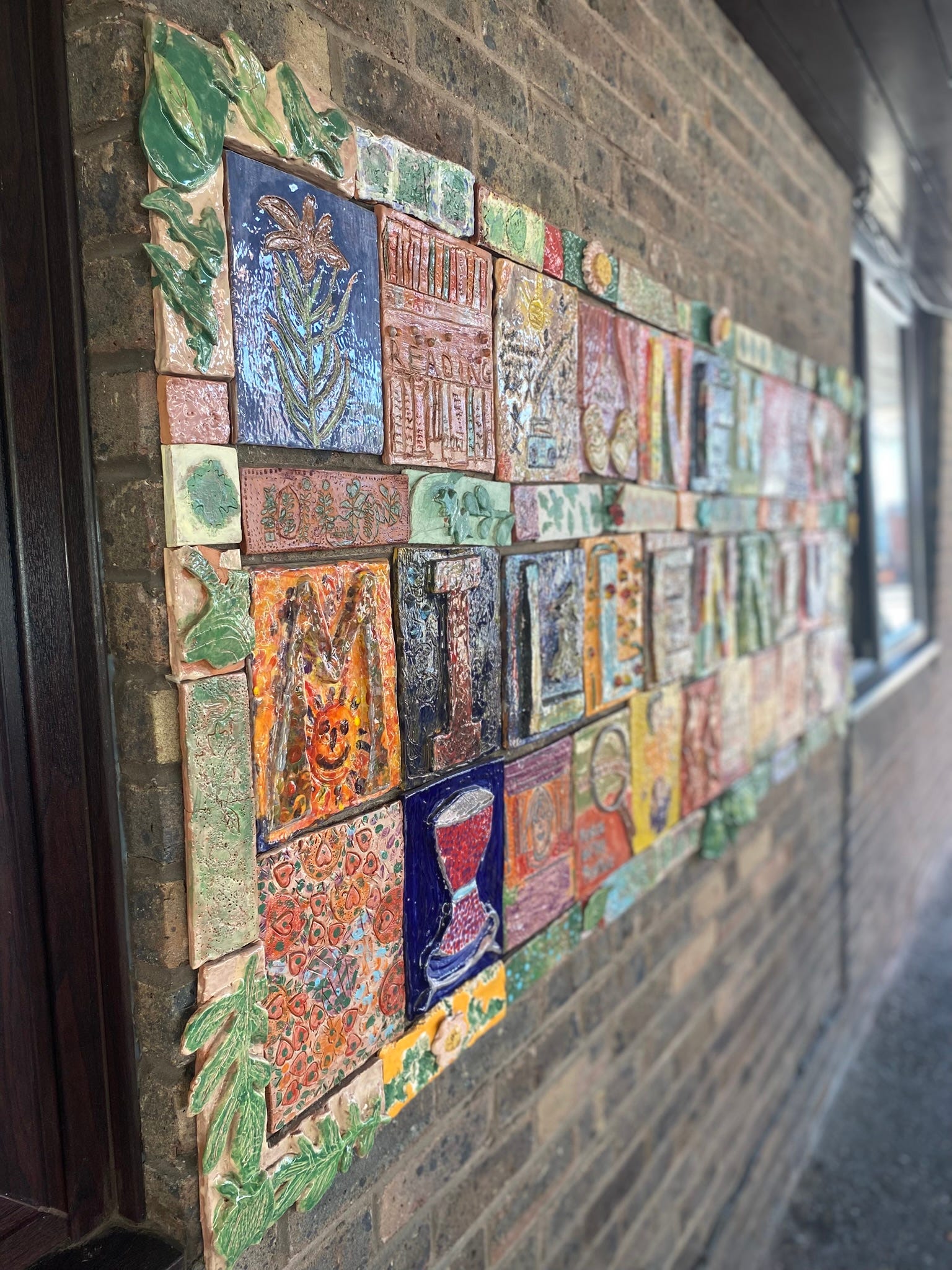
Mosaic on the wall. Source: Author’s.
I thought about rescheduling: I had a capricious toddler on my back. But summer days are long and the buses run often. I hopped on another bus and arrived half an hour later at a busy community centre, clearly signposted and humming with people. It looked like a school dining hall: not big, a little dark, but cosy and pleasant. A determined volunteer was clearing the tables and chairs. Helpers were still in the kitchen. Another volunteer was bent over arts and crafts with a scrum of children.
The kitchen was still open, so we sat down for a quick meal: stuffed red peppers in a sauce. Quickly estimating the nutritional value, I planned to abstain and feed it to my toddler. But, having emptied her snack bag on the bus, she refused it, and I had to try it. It was tasty. I polished the plate, and tried to remember what it felt like to be truly hungry.
We walked around the whole provision while the diner was cleared for a children’s event. We looked at the shop, near the end of its hours and almost empty. We popped in the store room, ambient food stacked and waiting to restock the shelves. I glanced at the glassed inner courtyard, off limits. “There is a pond there” sounded to me like all the more reason it should be open, but the Council was running several services from the hub and was not taking chances. We came back to where we had started – and where every member starts: the front office, and the assessment waiting room, with its small paired tables and chairs. People were sitting there, waiting or chatting.
We talked briefly about the research we are planning together. What happens to members after they leave the service? After six months, the wraparound closes. What does stability look like on the other side of it? Or is there stability at all? It is a question, not yet an answer. We said goodbye, and I let my patient toddler stay a while for the circus artists who had begun to fill the diner, mesmerising the children and their parents alike.
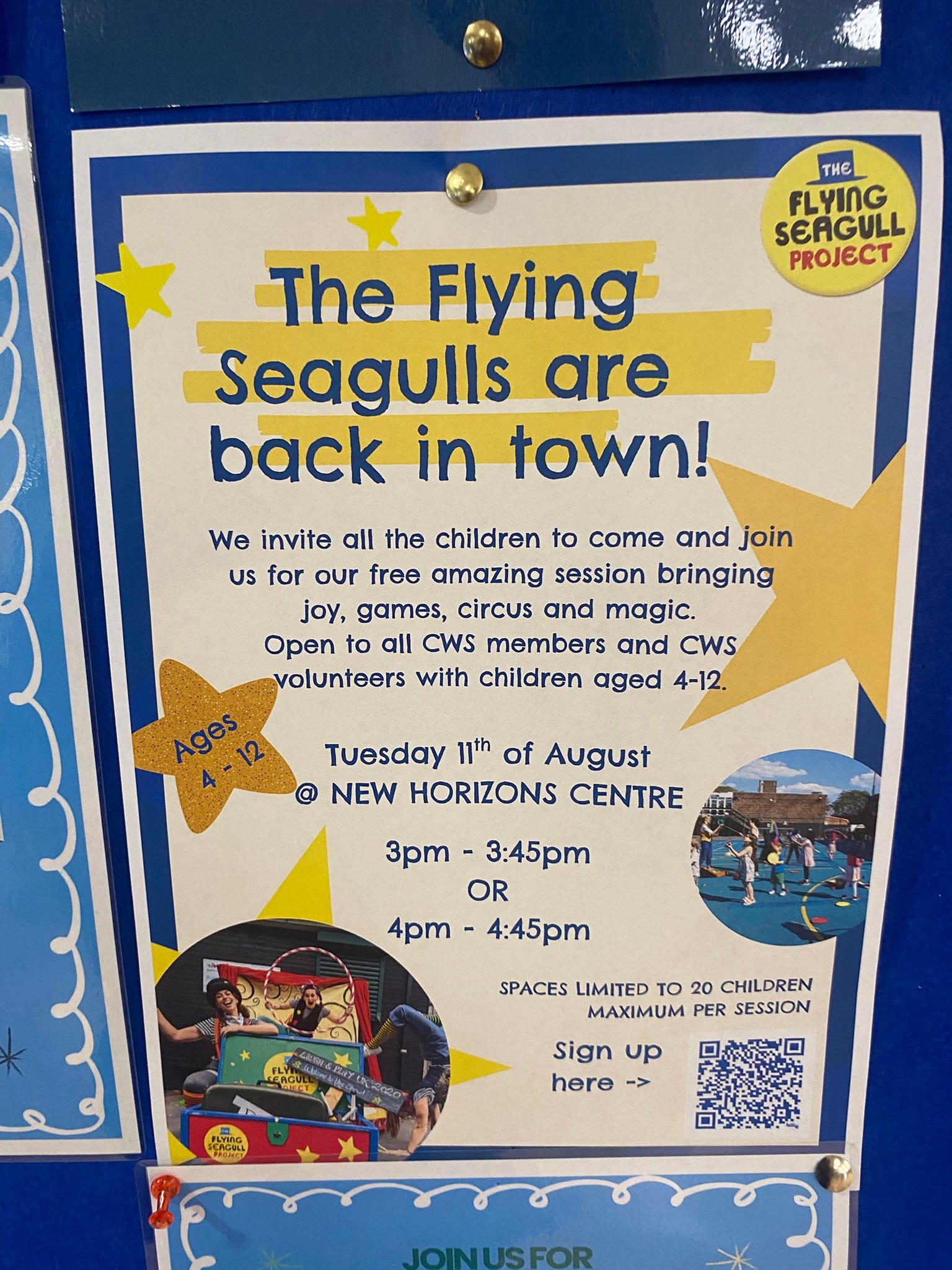
The Circus is here! Source: Author’s.
I kept thinking about their faces: some jubilant, some hesitant. This was their community space. I wondered how many of them had nowhere else to go in the summer.